Winterton dunes are large system of dunes a which is a national nature reserve, AONB and a designated special area of conservation (SAC) spanning 109 hectares on the east coast of Norfolk. The dunes are a great site for bird watching with 170 species having been recorded, being on the coast its very often used as a stop for birds migrating from northern Europe, some usual migrants include little tern of which Winterton is home to the largest UK colony consisting of 300 pairs, pink footed geese, purple sandpiper and sandwich tern just to name a few. A few more usual residents include colonies of grey seals, rabbits, Adders, natterjack toads, European stonechat, skylark and linnets. Also found at this site there is the home to one of the UK’s largest colonies of grayling butterfly and dark green fritillary, together with around 800 moth species visitors each year. This area is of particular importance as moth numbers indicate biodiversity in an area. This system of dunes is unusual in that the sand is slightly acidic and so is more suitable more plants that thrive best in these conditions, this differs from the dunes found in north Norfolk as the sand is calcareous, this unique feature means that the dunes at Winterton resemble more those found in the Baltic region and share more ecological similarities with them than the those slightly to the north of the county.
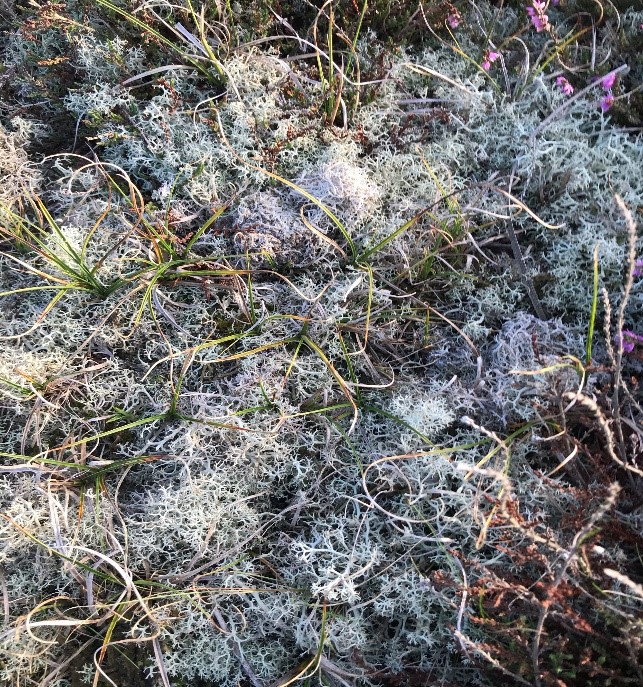
Winterton is home to wide variety of vegetation and within this the Lichen Cladonia Portentosa are found, this is a one of the most common reindeer lichens. As shown below the lichen is grey/blue in appearance and spreads across the sand and is important in that is contributes to stable dune structure.
Because this lichen is found in abundance at Winterton this suggests an acidic soil and is a good indicator of the health of the area.
Method
The purposes of the trip to Winterton was to identify the species found there but primarily to investigate the effect footpaths had on the distribution and coverage density of lichens. The Winterton area is a popular visitor attraction and as such there are concerns that the visitor footfall is impacting on the health of the wildlife and vegetation. Because Lichens are a good indicator of the health of an area, we investigated the lichen distribution on the paths. This study will carry out initial investigation into the lichen distribution and this will be followed up to monitor the impact of visitors on the area.
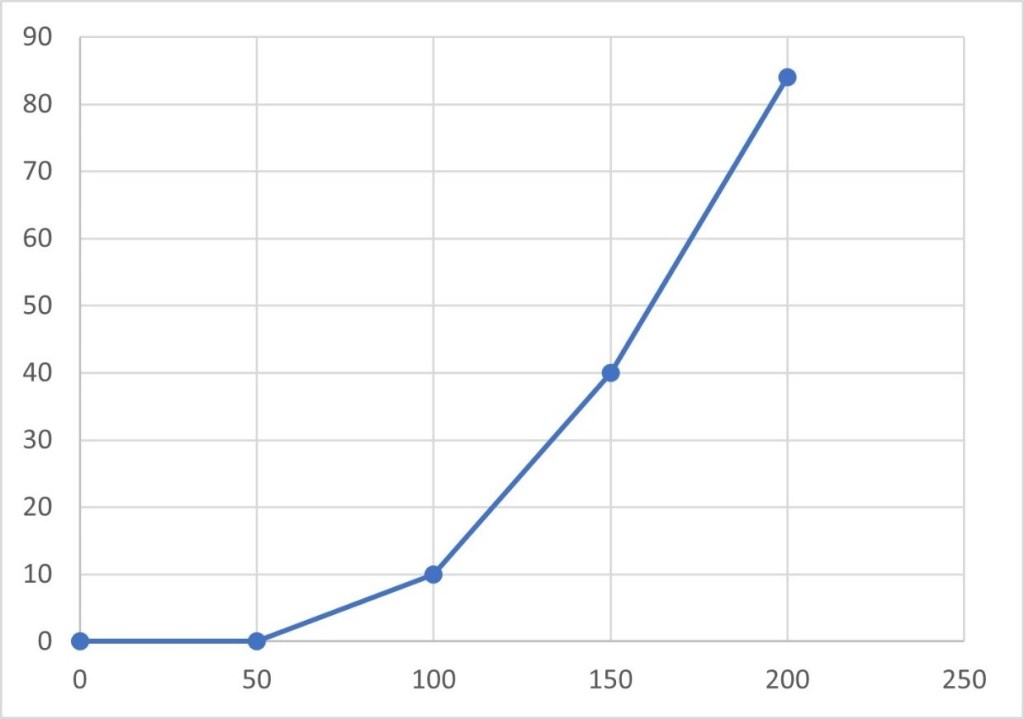
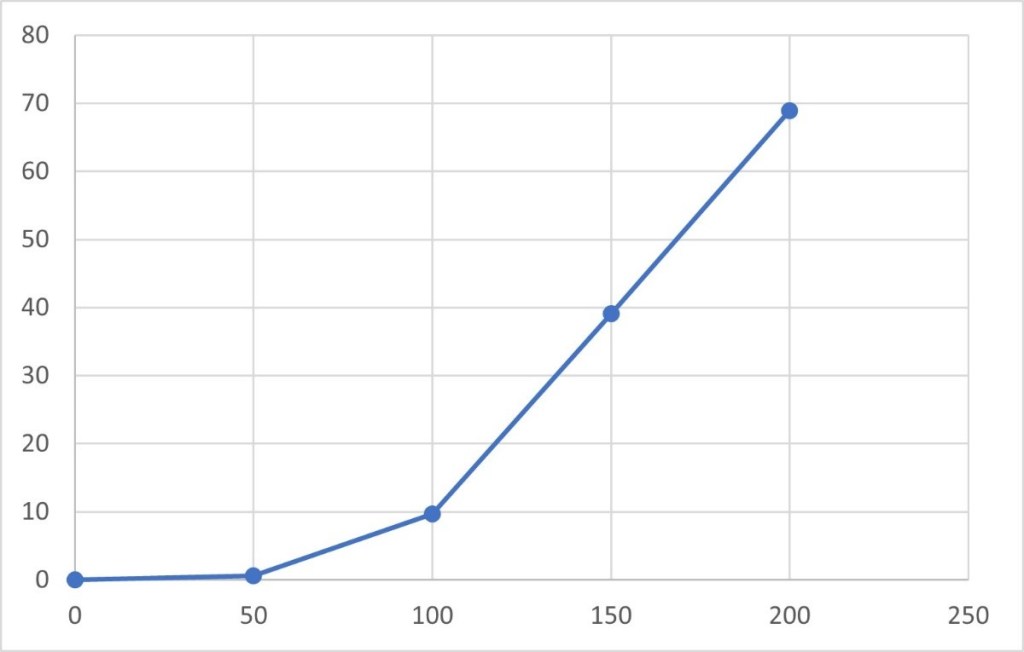
To do this we picked 3 paths to gather results from, a quadrat was placed at the centre (0 cm) of a path, the area was analysed and then the quadrat was moved 50cm outwards from the centre of the path, this was repeated 10 times for three different paths. The objective was to see how the Lichen changed in the different paths as you moved away from the centre. This is a popular dog walking area and the study was used to see how this affects distribution of lichen. The following graphs show an estimate of the percentage of lichen coverage as the quadrat moves away from point 0cm each time.
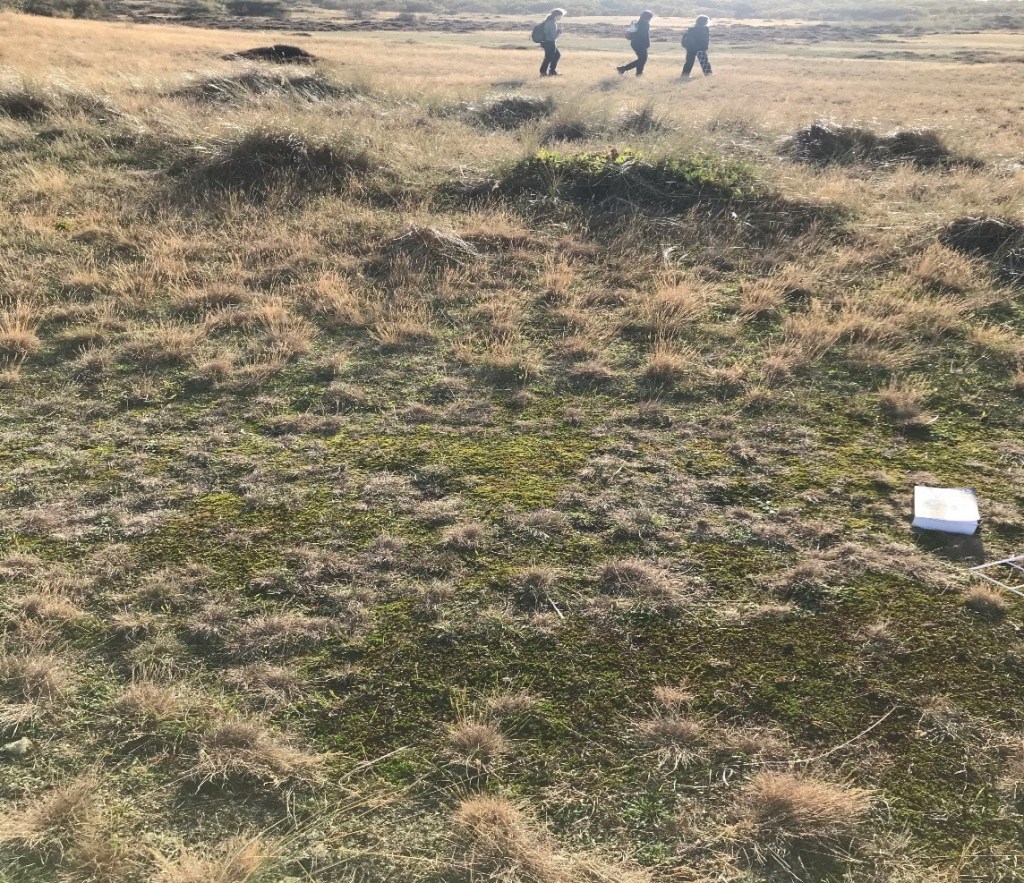
The image above clearly shows the difference of vegetation growing on the path and that on the border. The centre of the path being mostly trodden down grass and moss whereas what can be made out to be the border consists of taller grasses and lichens.
Path 1
estimated % of Lichen coverage
path 2
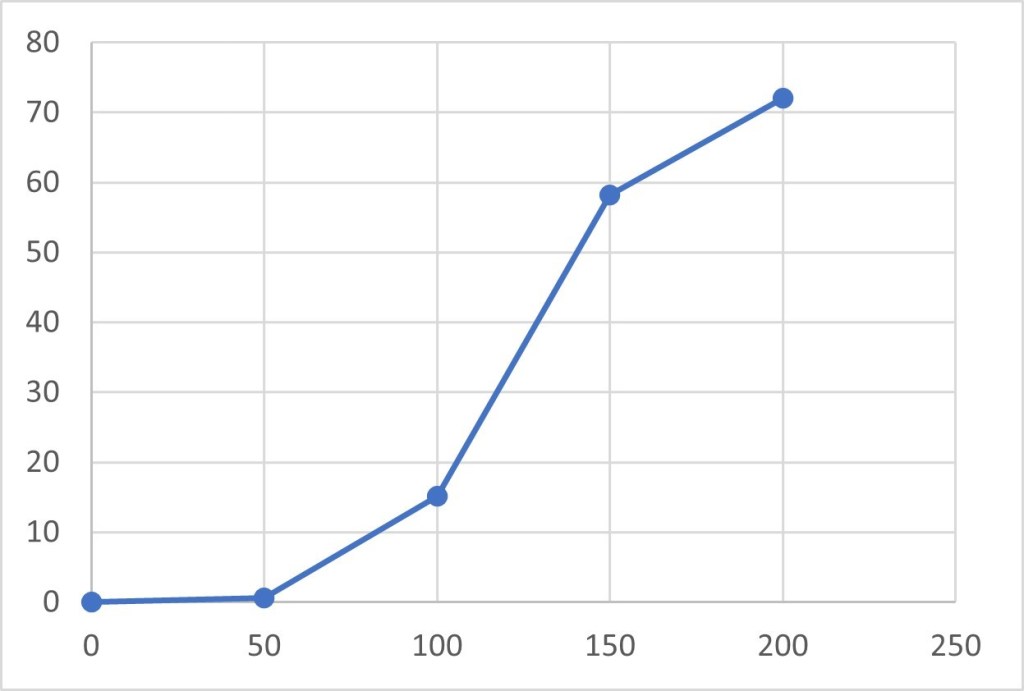
Path 3
estimated % of lichen present
Results
The results show that, as expected, in the centre of the paths in all three cases there were no lichens founds, there was evidence of moss and trodden down short grass, which differed greatly from the height of the grass at the border. The closer your move away from the centre of the paths the lichens begin to reappear. In all three cases at around the 100-150cm mark estimated % of lichens present begins to increase from the 10% mark. It should be noted that path two was the narrower path and the % increased more steeply than the two other wider paths. The results show that footfall to the paths has an impact on the distribution of lichen and therefore visitor numbers are affecting the present of the lichen. The centre of the paths shows no lichen present, and this is directly related to visitors, as you move from the centre of the path to the borders this lichen % increases.
Improvements to the study
- Larger sample size, in our survey we looked at three paths this could be extended by sampling more paths or the three paths used at different points along the path. The use of a tape measure could be used in order to be consistent in measuring the centre of the path and the distance from the centre.
- Accurate measurements on what we consider the border of the path to be. This would make the points of surveying more accurate. We estimated the percentage of lichen present but a more accurate method of recording this would be useful.
- Our paths were chosen to be within 100 metres of each other, in order to improve the survey of the area it would be useful to sample other paths away from the main paths. Our choice of paths were the wider paths, and our results showed slight variation when we sampled a narrower path (path 2), it would therefore suggest that sampling more narrower paths may improve the survey as representation of the whole area.
- Within each transect it was only the lichen coverage that was taken into consideration, next time to improve the other species found in the surveyed areas could also be recorded.
Recommendations for conservation of Winterton Dunes
- Select a small number of well-trodden paths to be chosen as the main access routes in area of interest, to be developed with hard borders e.g., sleepers to protect the lichen species. This would encourage visitors to stick to the paths and not encroach on the lichen. The benefit of this is that there is currently very little lichen life in 0 to 100/150cm from centre area, but after this the lichen percentage increases. By protecting these borders this will encourage good coverage of lichen. Although this may not stop dogs from wandering off the path the owners may try harder to keep them on it as there is a clear visible barrier.
- To aid recovery of lichen and other species in the areas most affected by footfall, fence posts, ropes and signage can be used to block off these areas allowing them to recover. Signs educating the public on these protected areas could also be put up to inform the public on the importance of keeping to the designated paths and why certain areas need to be protected.
- Recommendation that at certain periods in the year dogs are required to be kept on a lead to discourage walkers to go onto unprotected areas. This could also be enforced with the threat of fines enforced by wardens who patrol protected areas if the idea of roped and fenced areas went ahead. Not only would this benefit the vegetation grown on the now protected paths but could potentially cut down on the amount of dog faeces left unpicked up around the site as it may be more concentrated around the paths.
 Local Wildlife blog - UEA norwich
Leave a comment