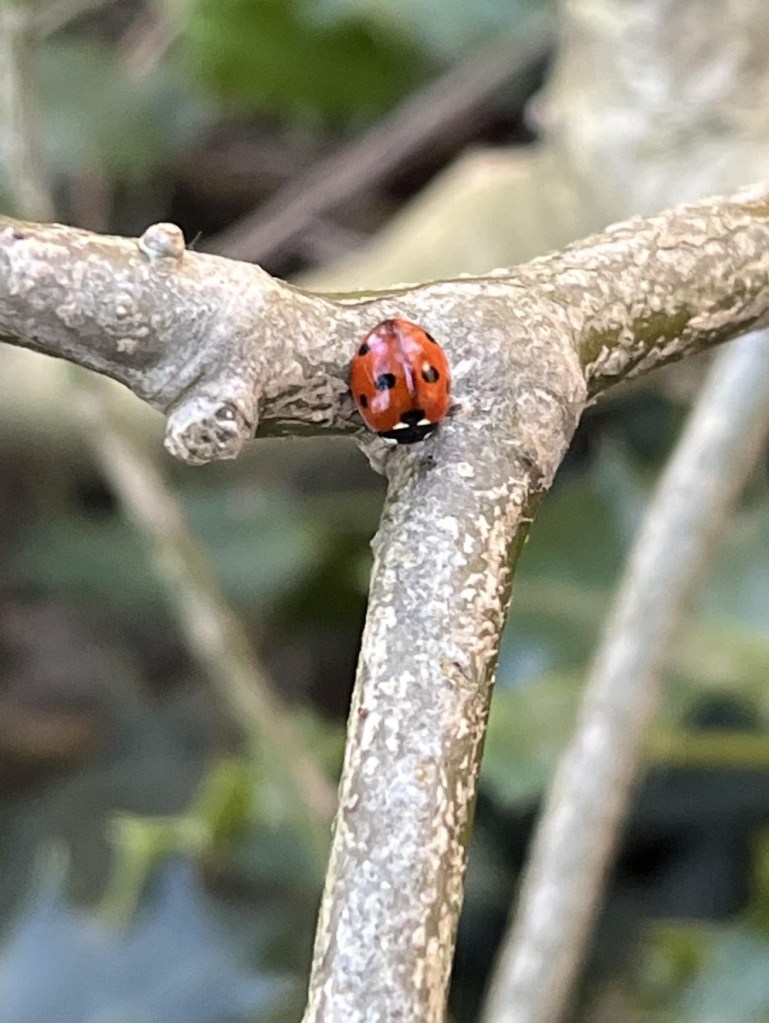
Coccinella septempunctata, or the seven-spot ladybird, is the most common ladybird in Europe. The familiar markings of the black-on-red markings of the 7-spot ladybird are common and popular with UK gardeners, the ladybird is a Beetle species that helpfully eat plant destroying insects. The beetle is approximately 6-8mm in length and its conservation status is common and their distribution is widespread, they are generally seen in the UK between March and October. The adult beetle hibernates in hollow plant stems, sometimes clustering together in a large group. Not only do we have native 7-spot ladybirds in the UK, but there is also a species who migrate to the UK every spring from warmer climates. The bright colours of ladybirds are a defence mechanism and warn predators that they taste horrible, the species can secrete a fluid from joints in their legs which gives them a foul taste. A threatened ladybird may both play dead and secrete the unappetising substance to protect itself. The beetle is easily recognised by its red wing cases, dotted with a pattern of seven black spots; it also has a familiar black-and-white-patterned thorax.
C. septempunctata has a broad ecological range, generally living wherever their food source of aphids are abundant. This includes, amongst other biotopes, meadows, fields, parkland, gardens, Western European broadleaf forests and mixed forests.
In the United Kingdom, there are fears that the seven-spot ladybird is being outcompeted for food by the harlequin ladybird.
 Local Wildlife blog - UEA norwich
Leave a comment