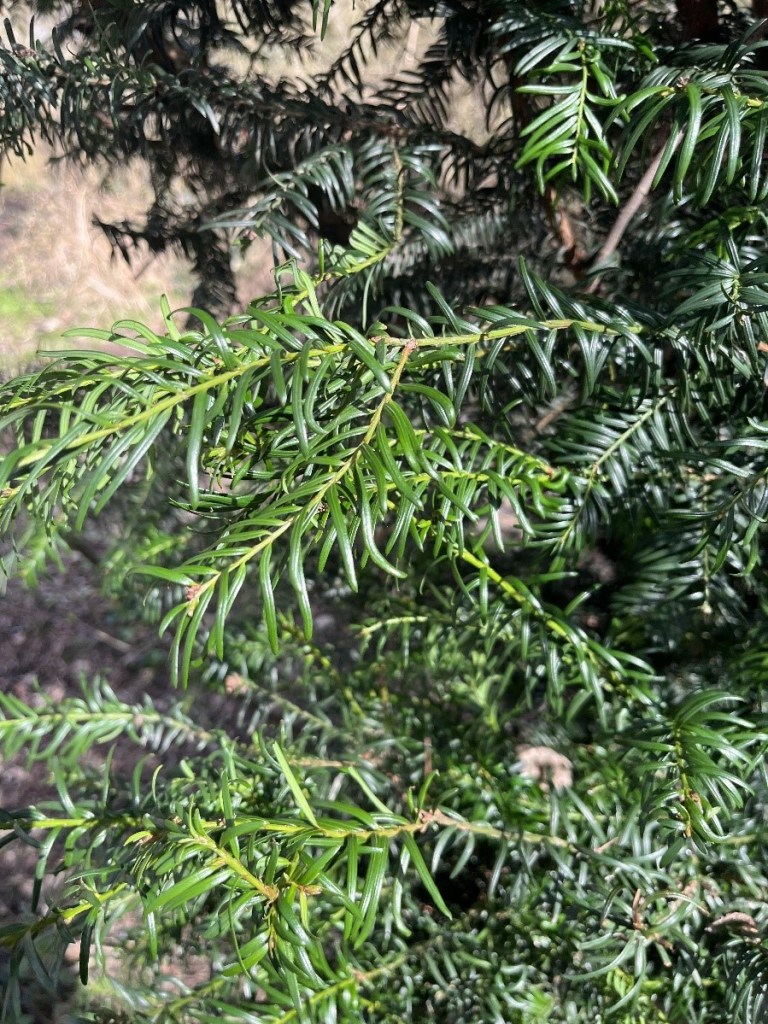
The Taxus baccata or known as the Yew Tree is a species of evergreen tree in the family Taxaceae, native to western, central and southern Europe (including Britain and Ireland), northwest Africa, northern Iran, and southwest Asia.The Yew is a very recognisable tree: it has dense, glossy, dark green needles and bright red berries with a single dark seed.
The tree is known as yew or common yew, or English yew. Although a common and primarily ornamental tree it is harmful. The most parts of the plant are poisonous, with toxins that can be absorbed through inhalation and through the skin, consumption of even a small amount of the foliage can result in death, despite this the yew is a well-known tree of churchyards, but also grows wild on chalky soils, more than 500 churchyards in England and Wales alone contain Yew trees that are at least as old as the church itself. This association with Christian religion (and possibly even older beliefs) and its ability to reach extreme old age have ensured that Yew is now surrounded by many myths. In fact, the dead were sometimes buried beneath Yew trees to ‘protect’ them. Yew trees can live for hundreds of years, turning into a maze of hollow wood and fallen trunks beneath dense foliage. The tree can grow up to 20m tall and is found year-round with a conservation status as common. One of the oldest Yew trees in the UK is the Fortingall Yew in Scotland, which is estimated at somewhere between 2,000 and 9,000 years old.
 Local Wildlife blog - UEA norwich
Leave a comment