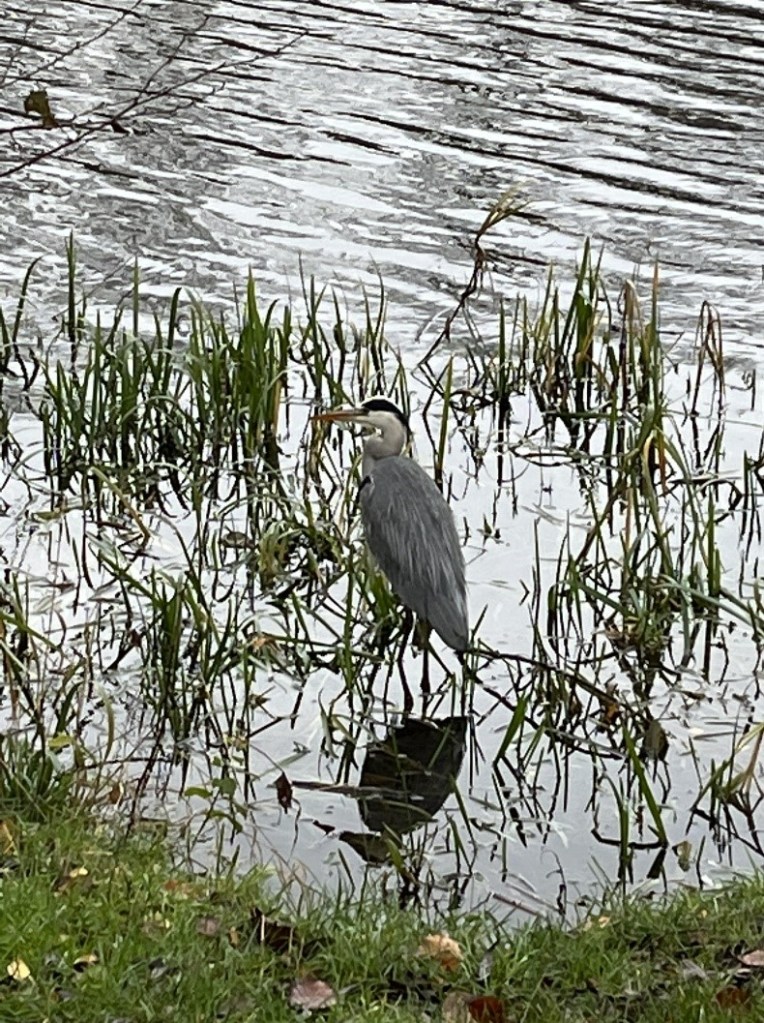
The Grey Heron, (Ardea cinerea), is a large bird in the stork and Ibis family. The heron, measuring 90-98cm in length and with a wingspan of 175-195cm is a long legged large wading bird, native to Europe, Asia and parts of Africa, in the UK it is estimated that around 63000 birds’ winter here. Standing around 1 metre tall the heron has a white head and a black stripe from the eye to the crest, its beak is sharply pointed and its legs are brown. The heron is a bird of wetland areas, it can be seen around lakes, rivers, ponds, marshes and on the sea coast. It feeds mostly on aquatic creatures which it catches after standing stationary beside or in the water or stalking its prey, fish, but also small birds such as ducklings, small mammals like voles and amphibian through the shallows. The heron breeds in the spring and usually lays 3-5 eggs which hatch 25 days later, an adult heron can live to approximately 5 years.
The grey heron has a slow flight, with its long neck retracted. It flies with slow wing-beats and sometimes glides for short distances. It sometimes soars, circling to considerable heights, but not as often as the stork. In spring, and occasionally in autumn, birds may soar high above the heronry and chase each other, undertake aerial manoeuvres or swoop down towards the ground. The birds often perch in trees, but spend much time on the ground, striding about or standing still for long periods with an upright stance, often on a single leg.
In Ancient Egypt, the deity Bennu was depicted as a heron in New Kingdom artwork. In Ancient Rome, the heron was a bird of divination. Roast heron was once a specially prized dish; when George Neville became Archbishop of York in 1465, 400 herons were served to the guests.
 Local Wildlife blog - UEA norwich
Leave a comment