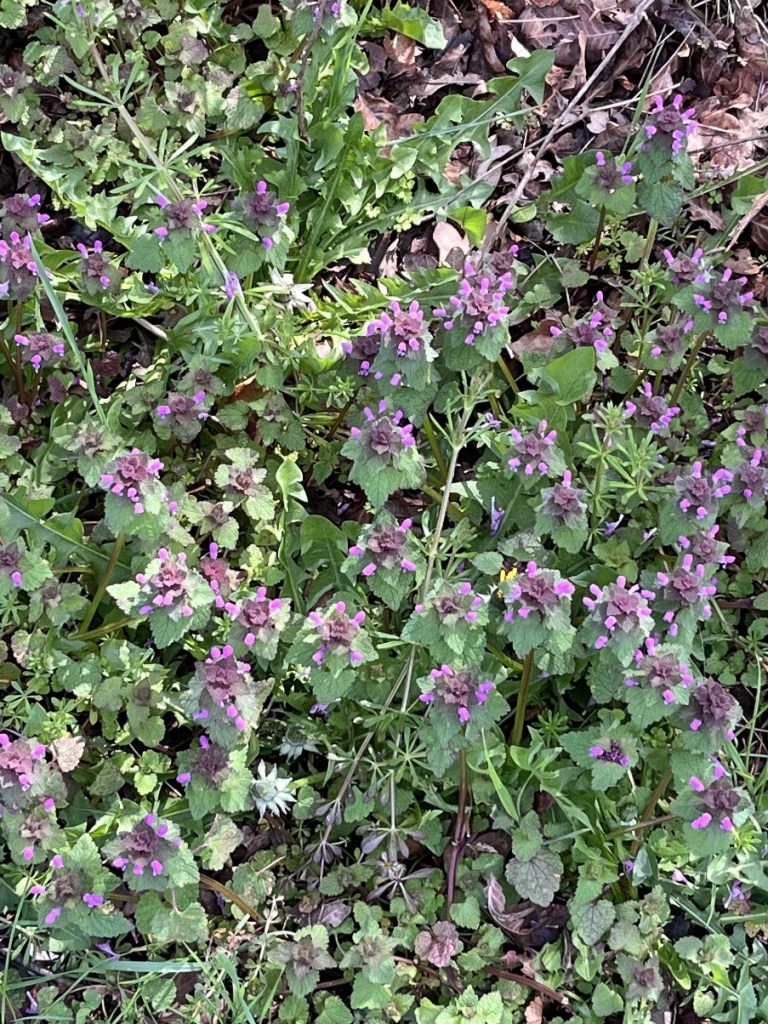
Red dead-nettle is a common plant of roadside verges, waste grounds and field edges, anywhere the ground has been disturbed or cultivated. Like yellow archangel, and other members of the dead-nettle family, it doesn’t have stinging leaves. It’s a member of the mint family Its crimson flowers appear from March to October
Looking similar to a stinging nettle, red dead-nettle is a downy annual with heart-shaped, toothed leaves, and reddish, square stems. Dense whorls of pink-red, ‘hooded’ flowers appear up the stem
Dead nettle leaves are highly nutritious. They’re a great source of vitamin C, A, and K, as well as iron, fibre, and bioflavonoids. Moreover, these leaves also have anti-inflammatory, antibacterial, and antifungal properties as well as diuretic, astringent, diaphoretic, and purgative effects.
Dead nettle herbal tea has been used as an herbal remedy for kidney disease, seasonal allergies, chills, and common colds. Consuming this edible plant can boost the immune system and fight off bacterial infections as well. Lastly, the leaves can also be used externally to stem bleeding and create a poultice to heal cuts, burns, and bruises.
 Local Wildlife blog - UEA norwich
Leave a comment