Traps were placed in the fenced off conservation area. First checked traps set out the previous evening. They were placed alongside wooded areas, hedges and brambles; they were placed slightly facing down hill so that if any mammals were caught any waste would travel out the end, basically keeping it clean and not soaking the bedding.
The main body of the traps were filled with hay and a variety of baits to give us the best chance at catching a range of species. The baits used were fly pupae/ casters( for shrews water common and pygmy are expected but water shrews are rare they are insectivores), peanut butter for the mice( eat fruit and grains voles eat the same) and voles, pieces of apple and carrot for mice and voles to allow them them to stay hydrated
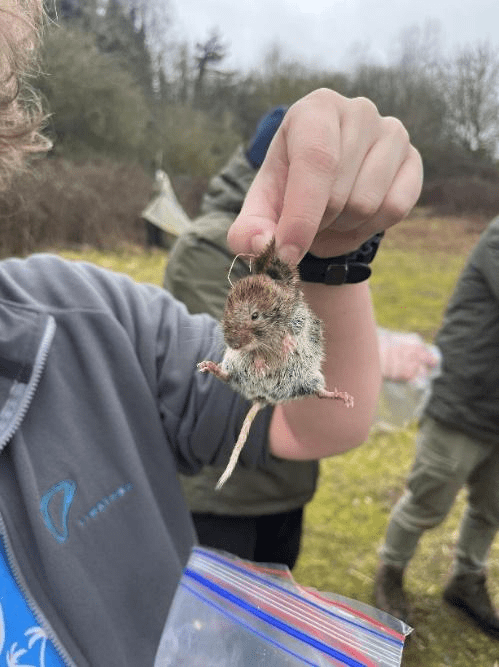
The animals expected were wood mice, yellow necked mouse(in the picture) , bank vole(also in picture) , field vole, also possible but rare is pygmy shrew, common shrew water shrew.

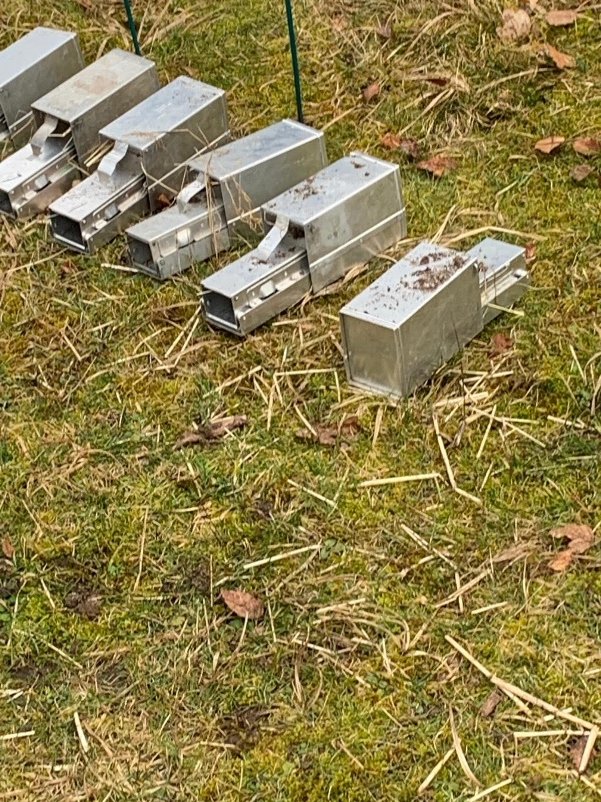
Traps from the previous day were collected, those that had the door triggered were carefully picked up, carried from the top as to avoid any urine or anything from getting on your hands if it seeps out. The triggered traps were placed in a line in the order of which they were placed, this meant we would have a clear idea of where to release the animals so to not place them in the wrong territory. Traps were placed slightly downhill again. When emptying the traps we would place them facing downward door first, release mechanism can be seen in the picture, the tunnel part of the trap would drop and the hope was the bedding the main part of the trap would follow with a possible animal if they did not come out straight away the base would be carefully shaken or tapped.
Once the animal was in the bag it can be confined to a corner, pinch the bag slightly this allows you to remove all of the contents of the traps without risk of escape when this is out of the way you can get a clear view of the animal and start to identify the species and the sex, this could be done while the animal is still in the corner of the bag
Animal released, taken to the area it was found, known from the order the traps were placed( see image), bag tipped gently and wait for animal to hop out
Not as many traps were triggered as expected but this was due to the fact that the area hadn’t been sampled for a while and they were not familiar with it, traps were set up again on the same side and checked again the next day, this time a much higher number of traps had animals in them or had been triggered, some of which were false triggers but still treated the same an actual one. Traps were also set up on the other side of the conservation area,which hadn’t been trapped recently, as expected the next day there was not as many animals compared to the side that had been used 2 days in a row
 Local Wildlife blog - UEA norwich
Leave a comment